Parliamentary Privileges under the Indian Constitution
TANMOY MUKHERJI INSTITUTE OF JURIDICAL SCIENCE
Dr. Tanmoy Mukherji
Advocate
Parliamentary Privileges under the Indian Constitution-
Tanmoy Mukherji
Advocate

Parliamentary privileges are special rights, immunities and exemptions conferred on Parliament, its Members and Committees to ensure the independent, efficient and fearless functioning of the legislature. These privileges protect Parliament from obstruction, intimidation or interference by external authorities including courts, executive agencies and private individuals.
Parliamentary privileges are functional, not personal, and exist to preserve the dignity, authority and supremacy of Parliament within the constitutional framework.
Constitutional Basis of Parliamentary Privileges-
(a) Article 105 – Privileges of Parliament-
-Applies to Members of Parliament and Parliamentary Committees
Contains provisions relating to:
→Freedom of speech
→Immunity from court proceedings
→Inherited privileges of the House of Commons.
(b) Article 122 – Bar of Judicial Inquiry
Courts cannot inquire into parliamentary proceedings on grounds of procedural irregularity
Article 105:
Freedom of Speech in Parliament – Article 105(1)
-Members enjoy absolute freedom of speech inside Parliament.
-This freedom is wider than Article 19(1)(a).
It is subject only to:
-Constitutional provisions
-Rules and Standing Orders of Parliament
Reference Case-
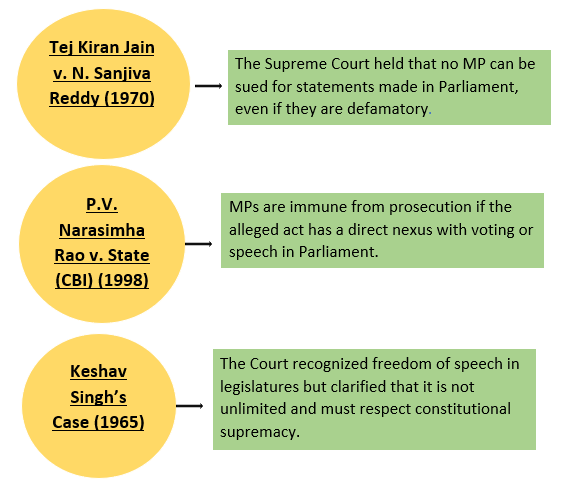
Immunity from Legal Proceedings – Article 105(2)-
No MP is liable to any proceedings in any court for:
→Anything said
→Any vote given
→Authorized publication of parliamentary proceedings
Reference Case-
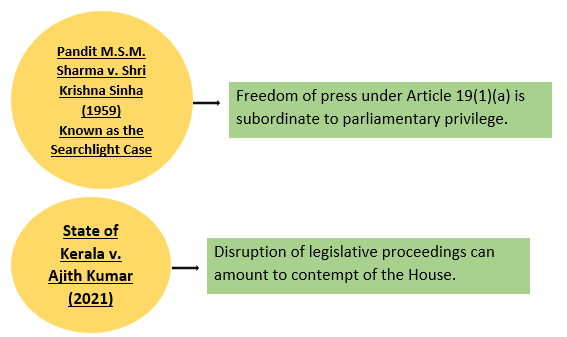
Privileges of the House of Commons – Article 105(3)-
→Until Parliament defines privileges by law, they remain equivalent to those of the British House of Commons.
→Parliament has not codified these privileges, leaving scope for ambiguity.
Reference Case-
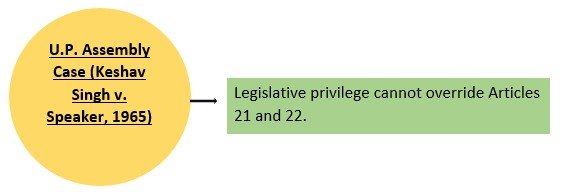
Special Reference No. 1 of 1964
Parliamentary privileges are subject to constitutional provisions and judicial review.
Article 122: Judicial Non-Interference-
-Courts cannot inquire into parliamentary proceedings due to procedural irregularity.
However, courts can interfere in cases of:
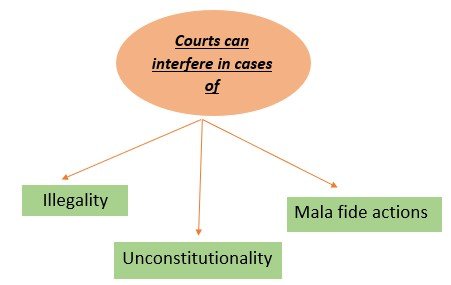
Reference Case-
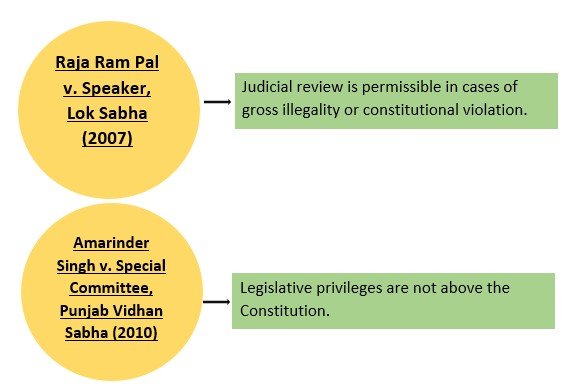
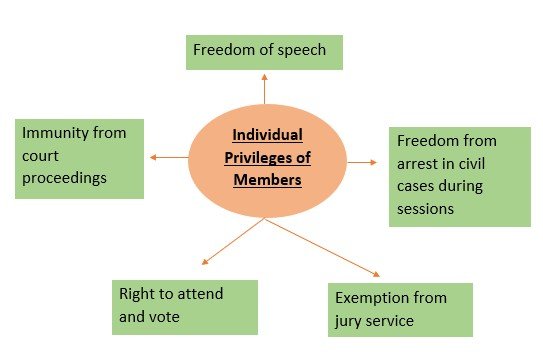
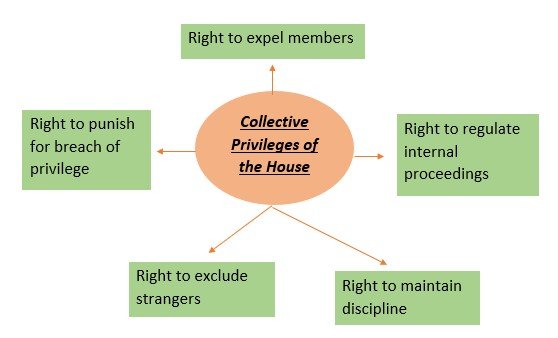
Classification of Parliamentary Privileges-
Reference Case-
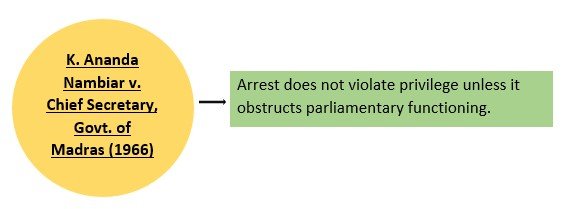
Reference Case-
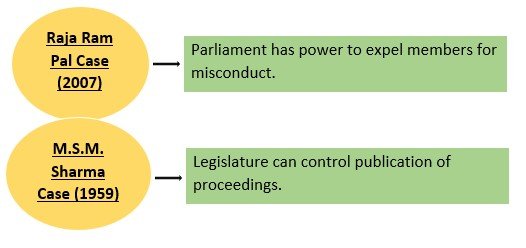
Breach of Privilege and Contempt of House
Breach of Privilege-
→Occurs when any privilege is violated.
Contempt of House-
Any act that:
→Obstructs functioning of Parliament
→Lowers its dignity
→Disrespects its authority
Reference Case-
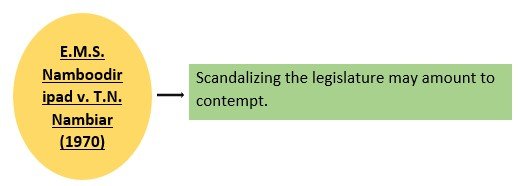
Parliamentary Privileges vs Fundamental Rights-
Parliamentary privileges do not override the Constitution.
They must be harmonized with:
→Article 14
→Article 19
→Article 21
Reference Case-
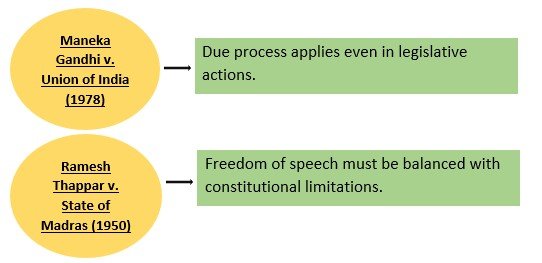
Codification of Parliamentary Privileges-
Arguments in Favor:
→Prevents misuse
→Ensures transparency
→Aligns with democratic principles
Arguments Against:
→Reduces flexibility
→May weaken legislative authority
Law Commission of India (42nd Report)-
Recommended codification of privileges.
Critical Evaluation-
Parliamentary privileges are essential but often misused.
Judicial review acts as a constitutional safeguard.
Balance between legislative autonomy and constitutional supremacy is necessary.
Parliamentary privileges play a crucial role in maintaining the independence, dignity and efficiency of Parliament. However, these privileges must operate within the constitutional framework, subject to judicial review and democratic values. Codification may bring clarity, accountability and harmony between Parliament and the Constitution.

we believe in a holistic approach to legal education building not just lawyers, but socially conscious leaders of tomorrow.
