REALIST SCHOOL OF JURISPRUDENCE
Dr. Tanmoy Mukherji
Advocate
REALIST SCHOOL OF JURISPRUDENCE-
Tanmoy Mukherji
Advocate

The Realist School of Jurisprudence is a modern school of thought which studies law as it actually operates in society, rather than as it is written in statutes or defined in abstract theories.
→It rejects the idea that law is a closed logical system and emphasizes that law is a dynamic social process.
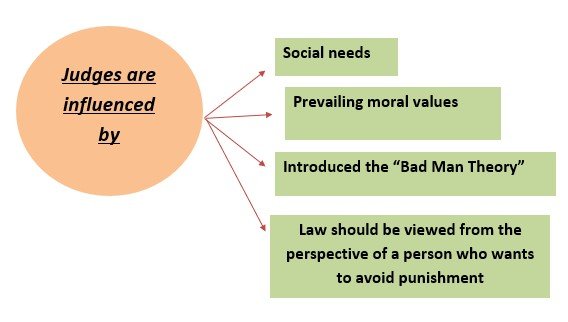
→Realists believe that judicial decisions are influenced by human, social, economic, and psychological factors.
Historical Background-
Originated in the United States during the early 20th century
Also developed in Scandinavian countries
Came as a reaction against:
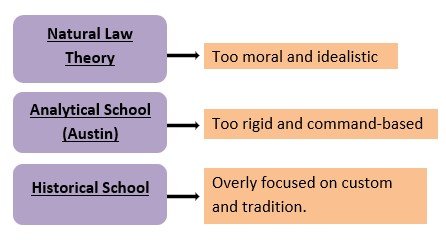
Realists argued that these schools ignored how courts actually function.
Central Thesis of the Realist School
“Law is what the courts do in fact.”
According to realists-
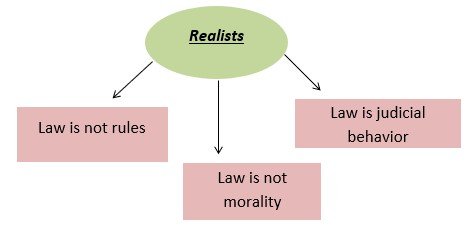
Hence, law can be understood only by studying court decisions and judicial practices.
Characteristics
Law in Action vs Law in Books
→Statutes and precedents represent law in books
→Court decisions represent law in action
→Realists focus on practical outcomes, not theoretical correctness.
Example: Two courts may interpret the same statute differently based on facts and social context.
Judge as a Law-Maker
→Judges do not mechanically apply law
→They interpret, modify, and create law
Especially important in:
→Hard cases
→Constitutional interpretation
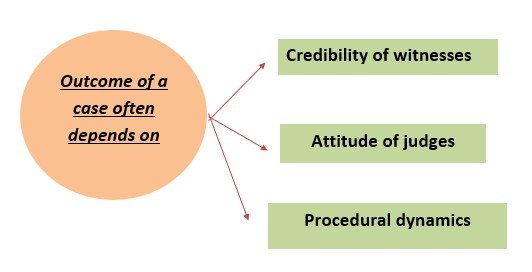
Uncertainty and Indeterminacy of Law-
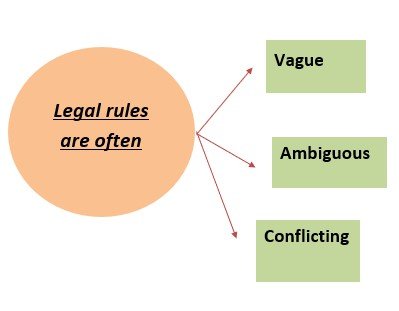
Hence, certainty in law is an illusion
Role of Extra-Legal Factors-
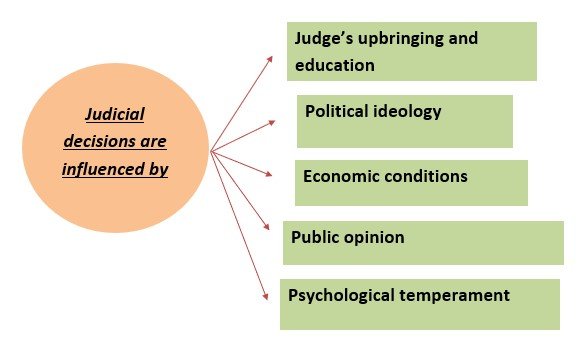
This is called the non-logical element of law.
Fact-Centered Approach-
Realists give priority to facts over rules
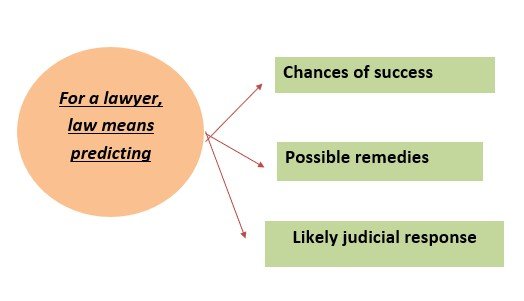
Predictive Theory of Law
Law is the prediction of what courts will do.
Leading Jurists and Their Views
American Realism
Oliver Wendell Holmes Jr.
Most influential realist thinker
Ideas:
Law evolves through experience, not logic.
Famous Quote:
“The life of the law has not been logic; it has been experience.”
Karl Llewellyn
Systematic realist
Contributions:
Distinguished between:
Paper rules (formal rules)
Real rules (rules actually applied)
Focused on:
→Behavior of judges
→Institutional practices of courts
→Supported judicial creativity within limits
Jerome Frank
Radical realist
Ideas:
→Fact skepticism
→Outcomes depend heavily on:
→Judge’s mood
→Emotional response
→Personal bias
→Believed legal certainty is impossible
Famous View:
“Justice is what the judge had for breakfast.”
Scandinavian Realism
Alf Ross
→Law is a social fact
→A legal rule is valid only if courts actually apply it
→Rejected metaphysical concepts of law
Karl Olivecrona
→Law is neither command nor morality
→Legal rules are psychological and social phenomena
→Emphasized collective acceptance
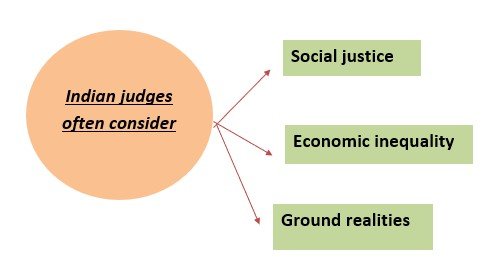
Realist School and Indian Legal System
Although India does not formally follow realism, its influence is visible:
Examples:
→Judicial activism
→Public Interest Litigation (PIL)
→Expansive interpretation of Fundamental Rights.
Case Example-
Maneka Gandhi v. Union of India (1978)
→Article 21 interpreted dynamically
→Shows realist approach
Contribution and Significance
→Brought reality and pragmatism into law
→Highlighted the creative role of judges
→Improved legal education and judicial training
→Encouraged empirical study of law
→Influenced modern constitutional interpretation
Criticism of the Realist School
→Destroys certainty and predictability
→Gives excessive power to judges
→Undermines rule of law
→Neglects importance of statutes
→Over-emphasis on psychology
-The Realist School revolutionized legal thought by shifting attention from abstract rules to real judicial behavior.
-Though extreme realism may threaten legal certainty, a balanced realist approach strengthens justice by aligning law with social realities.

we believe in a holistic approach to legal education building not just lawyers, but socially conscious leaders of tomorrow.
