Relationship between International Law & Municipal Law
Dr. Tanmoy Mukherji
Advocate
Relationship between International Law & Municipal Law-
Tanmoy Mukherji
Advocate

-The relationship between International law and municipal law (domestic/national law) concerns how international legal rules interact with and how influence a country's national internal legal system. This relationship determines how international obligations applied within a state.
-International law is a body of rules governing relations between states and international entities (e.g., treaties, customary international law etc.).
-Municipal law is the internal law of a state, including constitutional, legislative, administrative and judicial norms.
Theories of Relationship-
Monism-

Features-
i) No distinction in substance between international and domestic law.
ii) International law is automatically binding domestically without additional legislative acts.
iii) Treaties and customary international law can be applied by national courts.
Proponents-
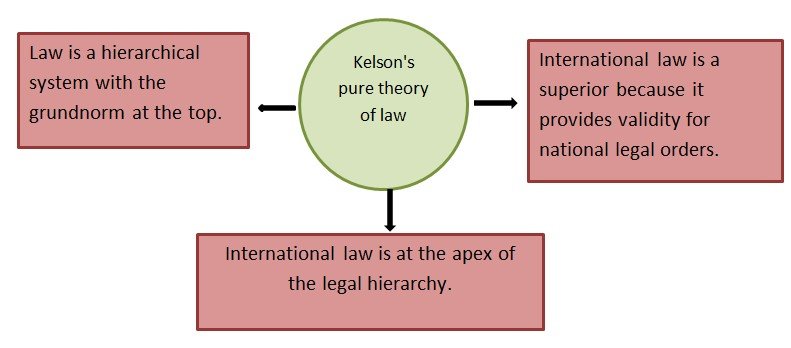
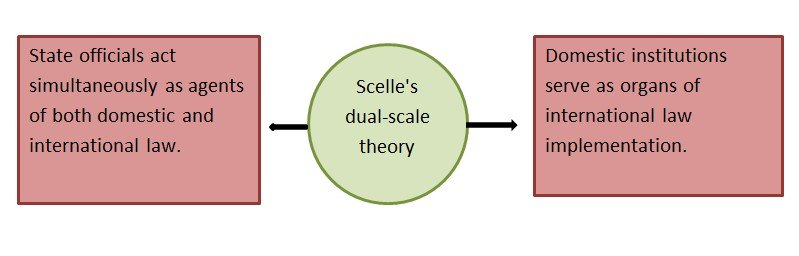
Hans Kelsen, Alfred Verdross, George Scelle.
Kelson's Theory-
Scelle's Theory –
Example-
Netherlands- Article 93-94 of the Constitutions allows treaties to have direct effect.
France- Art. 55 of the Constitution gives treaties precedence over national legislation.
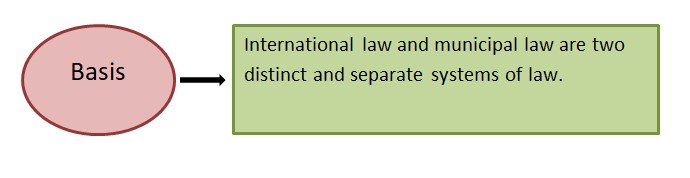
Dualism -
Features:
i) International law regulates relations between states, not individuals.
ii) Domestic law regulates relations among individuals and between individuals and the states.
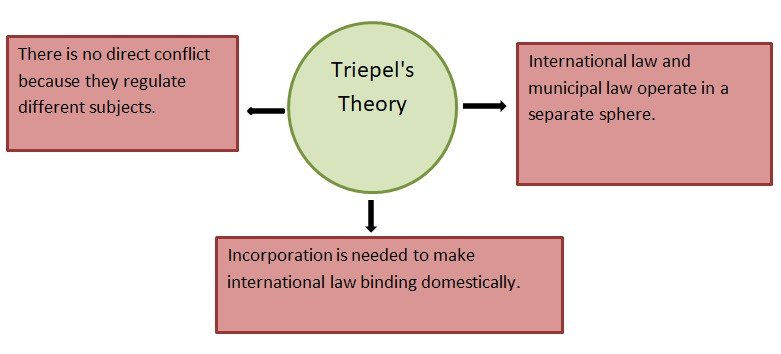
iii) International law must be incorporated before it can have domestic effect.
Proponents:
Heinrich Triepel, Dionisio Anzilotti.
Triepel's Theory-
Example-
United Kingdom- Treaties must be incorporated through legislation.
Nigeria- Article12 of the Constitution requires legislative domestication.
Germany- Followed a dualist model.
Harmonization Theory-

Features-
1. States should interpret domestic law consistently with international obligations.
2. Courts act as mediators to reconcile the two systems.
3. Emphasis on the presumption of conformity - domestic law should, where possible, be read consistently with international law.
Proponents-
Gerald Fitzmaurice, Hersch Lauterpacht, Higgins.
Example-
1. The European Court of Human Rights influences domestic courts to interpret national law consistently with the European convention.
2. Article 233 of the South Africa's Constitution instructs a court to interpret domestic law in line with international law.
Transformation Theory-

Features-
1. The international rule must be transformed into a domestic rule through a deliberate act of the legislature.
2. This transformation may involve word for word adoption or modification to fit the domestic system.
Proponents-
Ian Brownlie
Example-
The UK transforming European convention on Human Rights into domestic law through the Human Rights Act, 1998.
Delegation Theory-
Features-
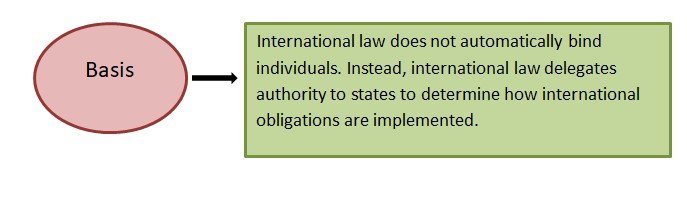
1. The international legal system recognizes that each state chooses its own domestic mechanism for compliance.
2. This theory supports the principle of state sovereignty within the international system.
Proponent-
J. G. Starke
Specific Adoption Theory-

Feature-
1. Customary international law is seen as part of the common law tradition.
2. Treaties, however, need legislative enactment before becoming binding domestically.
Proponent-
William Blackstone.
Example-
In the United Kingdom, customary international law is part of common law [Trendtex vs. Central Bank of Nigeria (1977)].
Incorporation Theory-
Features-
1. The act of state would itself incorporates international law: principles into domestic law
2. Courts apply international norms directly unless they conflict with domestic statutes.
Proponent-
Lord Alverstone [West Rand Central Gold Mining Co. Vs. The King (1905) 2 KB 391].
Example-
United States- The Paquete Habana (1900) recognized customary international law as a part of US law.
Supra-National Theory -
Features-
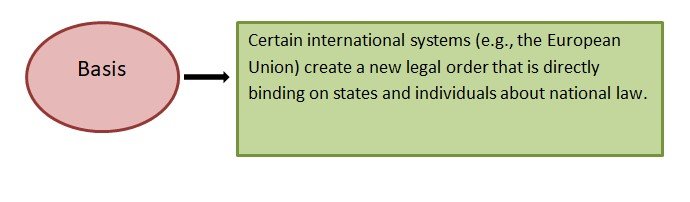
1. European Union law has direct effect and supremacy over conflicting national laws
2. Member states accept a limitation of sovereignty in favor of supra-national authority
Proponent-
Professor Hans P. Ipsen, Professor. Eric Stein
Example-
Costa vs. ENEL (1964) –
-established the supremacy of European national Union law over national law.
Van Gend en Loos (1963) –
-established the principle of direct effect.
Conditional on selecting incorporation theory-

Feature-
1. The Constitution may explicitly limit which international norms are directly applicable.
2. Domestic courts assess compatibility before applying international law.
Example-
India — International law applies only if not inconsistent with domestic laws. [Jolly George Varghese Vs. Bank of Cochin (1980)]
The relationship between international law and municipal law is multi-layer and dynamic.

we believe in a holistic approach to legal education building not just lawyers, but socially conscious leaders of tomorrow.