Right to Education under the Indian Constitution
TANMOY MUKHERJI INSTITUTE OF JURIDICAL SCIENCE
Dr. Tanmoy Mukherji
Advocate
Right to Education under the Indian Constitution-
Tanmoy Mukherji
Advocate
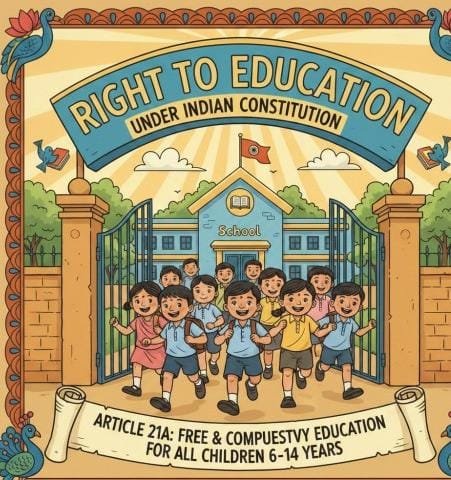
Education is the foundation of democracy, social justice, and economic development. The Indian Constitution initially treated education as a Directive Principle, but through judicial interpretation and constitutional amendments, it has become a Fundamental Right. Today, the Right to Education (RTE) forms an integral part of the constitutional scheme under Articles 21A, 14, 15, 29, 30, 41, 45, 46, and 51A(k).
The transformation of education from a non-justiciable goal to an enforceable right is one of the greatest constitutional developments in India.
Judicial Evolution of Right to Education under Article 21-
Article 21 guarantees the Right to Life and Personal Liberty. The Supreme Court of India interpreted this Article broadly to include the Right to Education as part of the right to live with dignity.
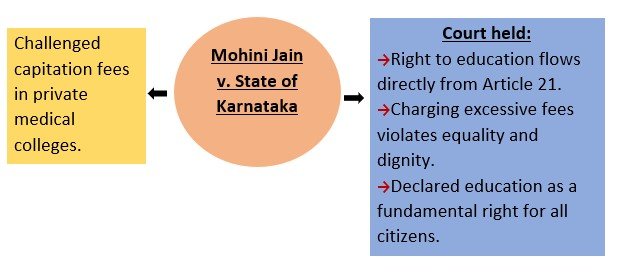
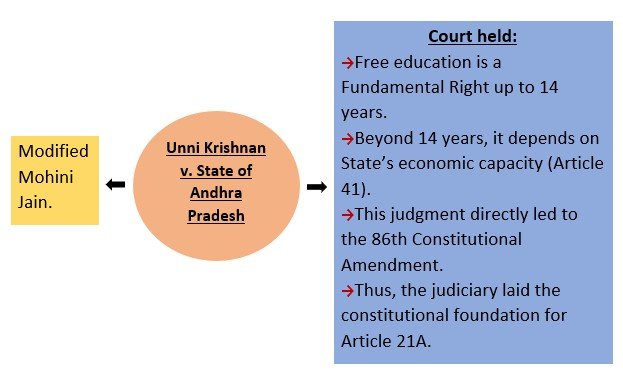
Article 21A – Constitutional Recognition (86th Amendment, 2002)-
The 86th Constitutional Amendment inserted Article 21A, making education a Fundamental Right:
“The State shall provide free and compulsory education to all children of the age of 6 to 14 years…”
This amendment also:
→Modified Article 45.
→Inserted Article 51A(k).
→To implement Article 21A, Parliament enacted the Right of Children to Free and Compulsory Education Act.
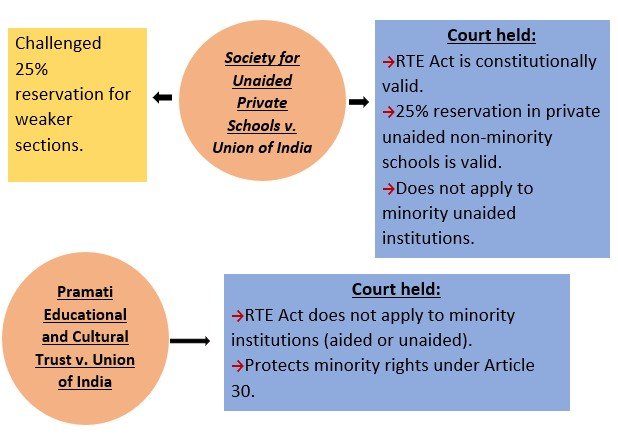
Validity and Scope of the RTE Act, 2009-
Directive Principles and Educational Mandate-
Before Article 21A, education was part of Directive Principles:
Article 45
Originally: Free and compulsory education up to 14 years.
Now: Early childhood care for children below 6 years.
Article 41
→Right to education within economic capacity.
Article 46
→Promote educational interests of SCs, STs, and weaker sections.
→These provisions reflect the welfare state philosophy.
Equality and Non-Discrimination in Education-
Article 14 – Equality before Law.
Article 15(1) – Prohibits discrimination.
Article 15(4) & 15(5) – Special provisions for backward classes in education.
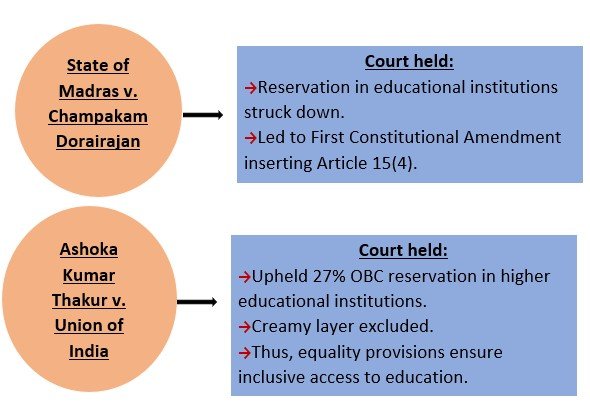
Minority Educational Rights (Articles 29 & 30)-
Article 29
Protection of language, script, and culture.
Article 30
Right of minorities to establish and administer educational institutions.
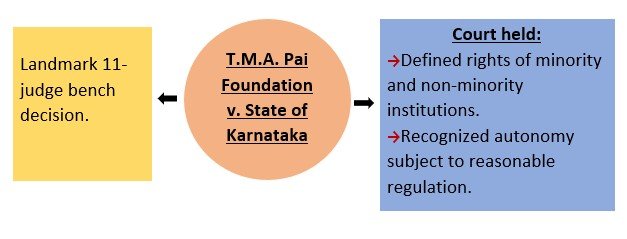
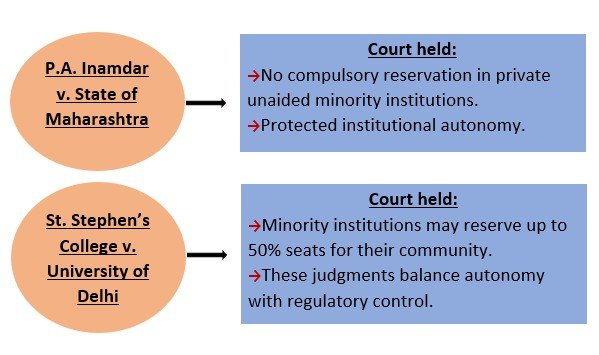
Regulation of Private Educational Institutions-
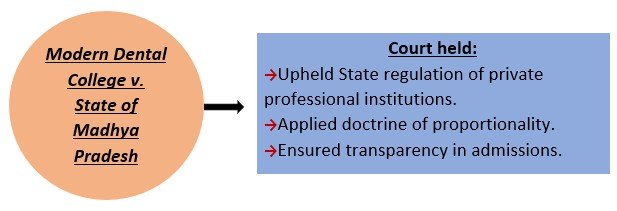
Education in the Concurrent List-
By the 42nd Constitutional Amendment (1976):
→Education moved from State List to Concurrent List.
→Both Parliament and State Legislatures can legislate.
→Ensures national uniformity with federal flexibility.
Fundamental Duty – Article 51A(k)-
→Parents/guardians must provide educational opportunities to children aged 6–14 years.
→This creates shared responsibility between State and citizens.
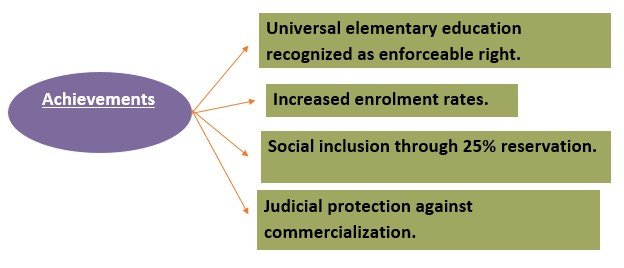
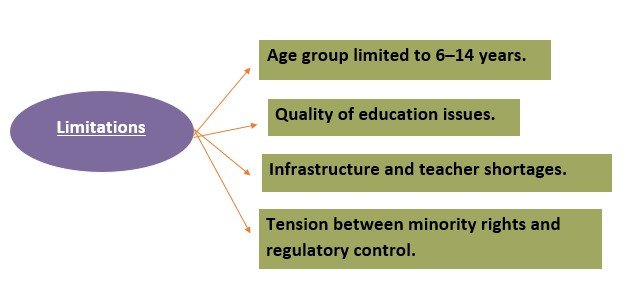
Critical Analysis-
Limitations-
The Right to Education in India reflects constitutional morality and social justice. Through judicial activism, constitutional amendments, and statutory implementation, education has evolved from a Directive Principle to a Fundamental Right.
Articles 21A, 14, 15, 29, 30, 41, 45, 46, and 51A(k) together create a comprehensive constitutional framework ensuring:
→Access
→Equality
→Inclusiveness
→Autonomy with regulation
Thus, the Right to Education is not merely a legal right but a transformative constitutional promise aimed at building an egalitarian and democratic society.

we believe in a holistic approach to legal education building not just lawyers, but socially conscious leaders of tomorrow.
