VOLKSGEIST SCHOOL OF JURISPRUDENCE
Dr. Tanmoy Mukherji
Advocate
VOLKSGEIST THEORY OF JURISPRUDENCE-
Tanmoy Mukherji
Advocate
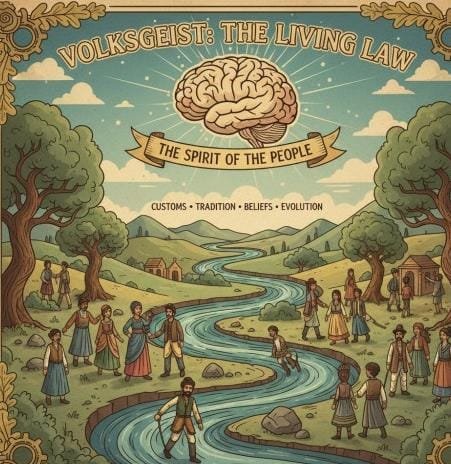
The word Volksgeist is derived from:
Volk = People / Nation
Geist = Spirit / Consciousness
Volksgeist means the “collective consciousness of the people.”
Savigny believed that-
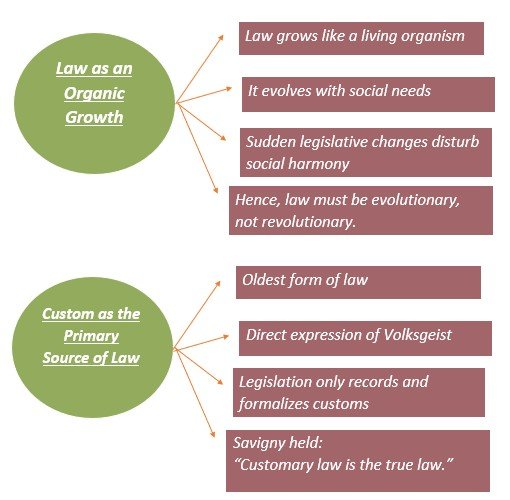
→Law is embedded in the social psyche
→It reflects shared beliefs, customs, traditions, and habits
→Law evolves unconsciously, not deliberately
→Just like language, law is discovered, not invented.
Intellectual Background-
A. Reaction Against Enlightenment Rationalism-
Savigny opposed-
→Natural law thinkers who believed law is based on universal reason
→Revolutionary codifications like the Napoleonic Code
He argued that-
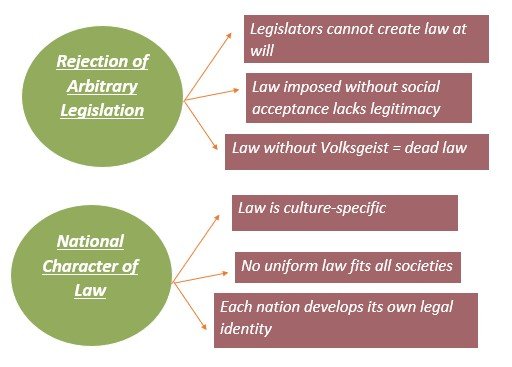
→Rational law-making ignores cultural identity
→Imported laws alienate people from justice
B. Historical Context (Germany)-
→Germany was not politically unified
→Diverse customs across regions
→Savigny feared codification would destroy legal diversity.
Core Postulates of Volksgeist Theory-
Role of Jurists and Judges (Refined View)-
Savigny gave a special place to jurists:
Functions:
→Discover law hidden in customs
→Organize and systematize it
→Ensure continuity
→Judges and jurists are custodians, not creators, of law.
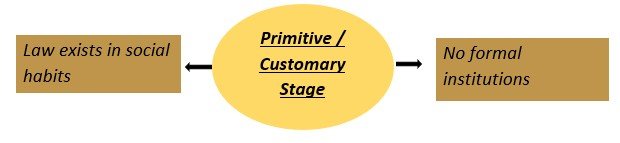
Stages of Legal Development-
Stage 1-
Stage 2:
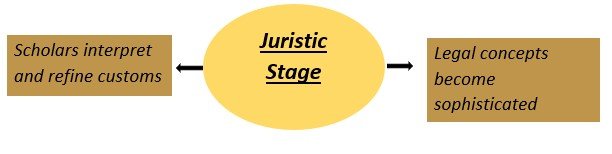
Stage 3:
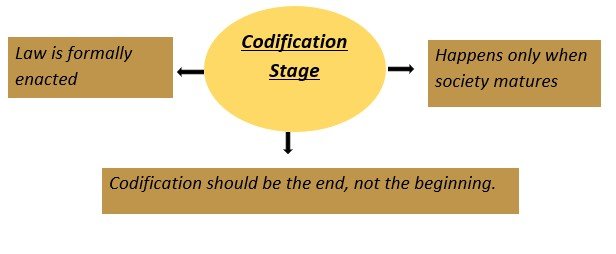
Supporters and Contributors-
A. Georg Friedrich Puchta
→Law arises from national consciousness
→Emphasized systematic legal science.
B. Sir Henry Maine (Modified Historical Approach)
Law evolves from:
→Status → Contract
→Supported reform when customs become oppressive.
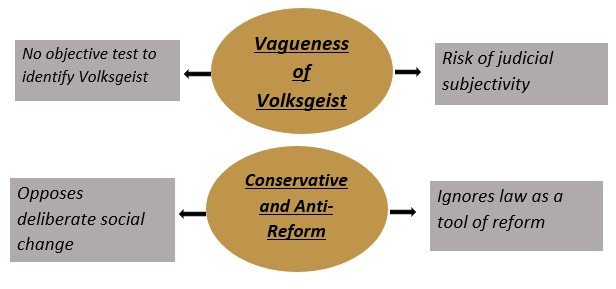
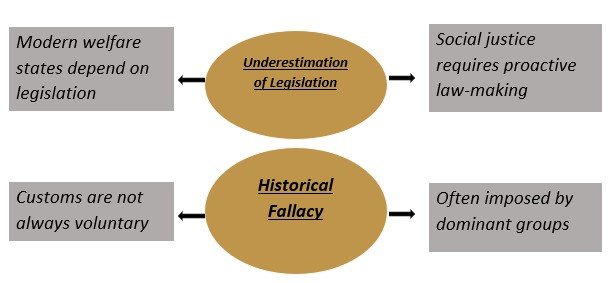
Volksgeist Theory vs Social Reform-
Strength:
→Respects social traditions
→Prevents alien legal systems
Weakness:
→Can legitimize unjust practices
Example:
→Caste discrimination
→Patriarchal customs
→Untouchability
These reflected past social beliefs but violated justice.
Criticism-
Relevance of Volksgeist Theory in India-
A. Recognition of Custom-
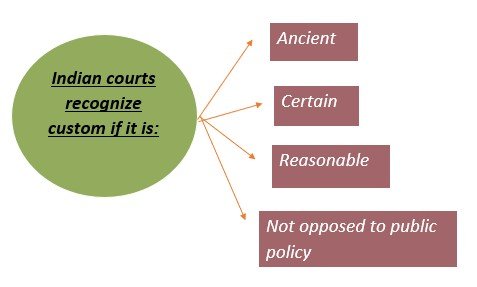
Example:
Collector of Madura v. Mootoo Ramalinga Sethupathi (1868)
B. Personal Laws-
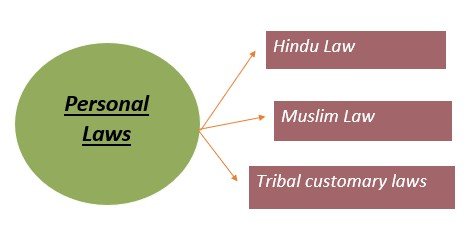
These reflect plural Volksgeists within India.
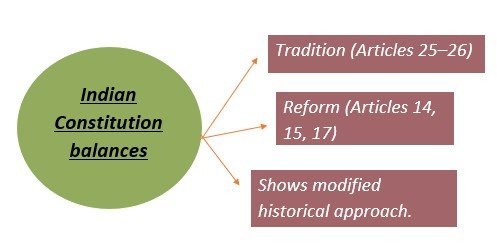
C. Constitutional Balance
Indian Constitution balances:
Evaluation-
Volksgeist theory reminds us that:
→Law divorced from society loses legitimacy
→Legal continuity ensures stability
However:
→Blind obedience to tradition obstructs justice
→Modern jurisprudence accepts Volksgeist but rejects its rigidity.
Conclusion-
The Volksgeist theory provides a historical and sociological foundation of law, emphasizing that law must grow from the collective life of the people.
Yet, in modern democratic states, law must also act as an instrument of social transformation. Therefore, Volksgeist remains relevant only when harmonized with constitutional values and social justice.
“Law is not made; it grows with the people.”—Dr T. Mukherji.

we believe in a holistic approach to legal education building not just lawyers, but socially conscious leaders of tomorrow.
